
Our mission is to form followers of Jesus to bring Heaven on Earth through communities on mission.
Who We Are
Trinitas operates as a decentralized network rather than a centralized campus model. New communities begin when two or more people discern a shared calling toward a particular people, place, or purpose. These communities gather in prayer, practice shared life, and seek to embody the Gospel within their local context.
The guiding question is simple:
What might the Kingdom of God look like here?
Communities develop organically. Some mature into churches. Others remain focused missional initiatives embedded within neighborhoods, campuses, recovery environments, or other specific contexts.
Spiritual Formation & Leadership Development
We believe a sustainable mission requires formed, resilient leaders. Across our Trinitas family, here near, and far, we value:
Prayerful Spirit Dependency that is rooted in Scripture and contemplative communal prayer
Beloved community marked by grace and interdependency with one another
Incarnational presence within real places and relationships
Missional Empowerment where everyone has a part in God’s story
Our Story
In the early years of planting Trinitas Church, Pastors Jad and Jaime Levi and their team followed a familiar path. They gathered a team, organized gatherings, and worked tirelessly to create momentum. Like many church planters they carried vision, energy, a deep longing to see people come alive in Christ, and many of the same Christ-centers convictions for the marginalized and oft forgotten. And yet, for three long years, it was significantly harder than expected.
The strain led to honest reflection. Beneath the activity were deeper questions about sustainability, formation, and faithfulness. Was the goal to build a crowd, or to form a people? Was there a way to plant that felt more aligned with the rhythms, life, and ministry of Jesus and the early Church?
Rather than pushing harder, they slowed down. They and their small community leaned into prayer, fasting, Scripture, and discernment. They paid attention to their urban context in Phoenix — to the overlooked, the spiritually curious, the poor, the weary. Out of that season, something began to take shape as God lead them to a new question: What if instead of engaging missionally and inviting people back to a church service, we sent people on mission to their God-given area of passion, planted the Gospel, and formed communities there?
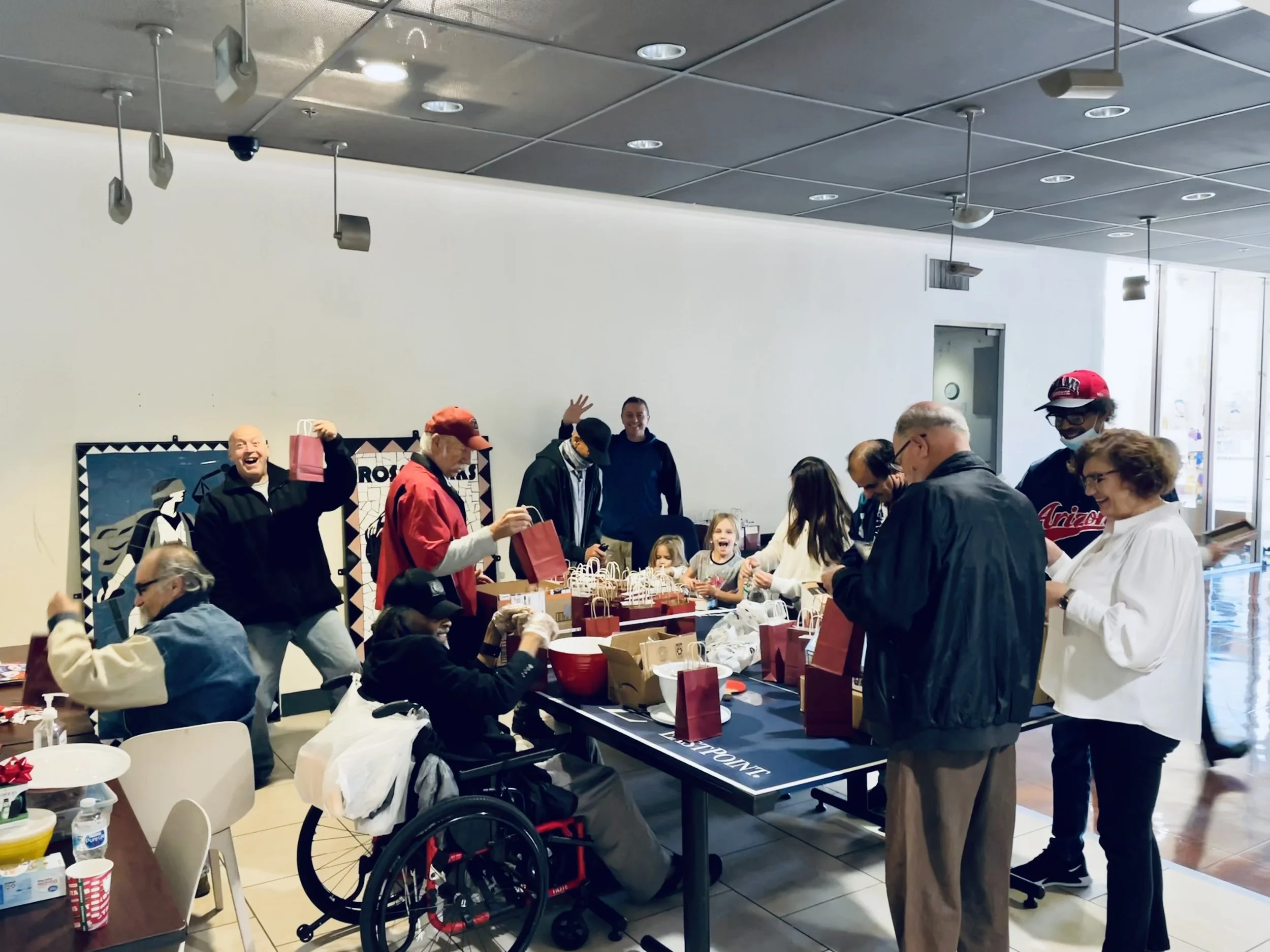
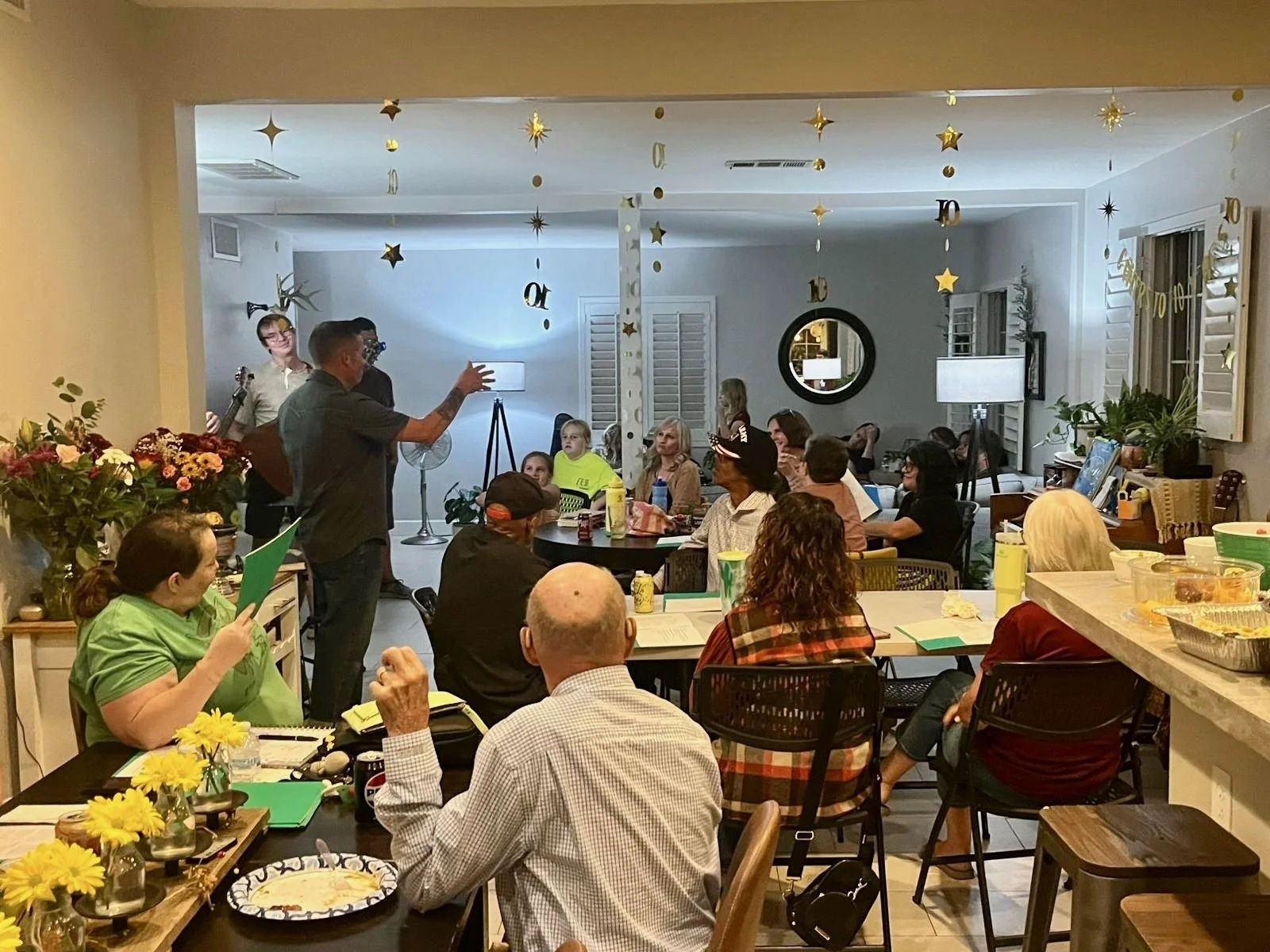
In 2018, these small experiments became what are now known as Communities on Mission. Instead of centering everything around a single weekly gathering, communities began forming wherever two or more people sensed a shared calling toward a particular people, place, or purpose. Living rooms, coffee shops, transitional housing spaces, prison units, and neighborhood blocks became places of real spiritual family and faithful presence.
These were not programs attached to a church. They were the Church — expressed locally, prayerfully, and incarnationally.
Over time, a decentralized network began to grow from Phoenix into other cities. After years of cultivating Communities on Mission in Phoenix, we accidentally planted our first church in Jacksonville, FL. Its first community on mission kicked off in a cafe that caters to families with special needs children. Through that process, God showed us how to launch churches expressed some sort of decentralized network or hybrid church. Rather than launching large centralized campuses, these new church plants were designed from the start as networks — relationally connected, theologically aligned, and locally embedded - nationally and internationally. What had begun as a response to struggle has become a reproducible framework for renewal and multiplication.
Today, Trinitas Communities serves in diverse urban contexts — among those in transitional housing, veterans, urban youth, prisoners and their families, individuals in recovery, refugees, women in crisis, families with special needs, and neighbors experiencing homelessness. Some expressions mature into churches. Others remain focused missional communities. All share a commitment to historic Christian faith and to patient, Spirit-led formation.
The questions that reshaped us continue to guide us: What is the Spirit doing in our city? Who are we being sent to? What might God’s Kingdom look like here?

The Son can do nothing by himself; he can do only what he sees his Father doing.
—John 5:19